The Shiva statue is one of the most powerful and widely recognized representations in Hindu culture and spirituality. Across India and many parts of the world, these statues stand as sacred symbols of Lord Shiva—one of the principal deities in Hinduism. Whether carved in stone in ancient temples or built as massive modern monuments, the Shiva statue represents deep philosophical ideas such as transformation, destruction of ignorance, inner peace, and cosmic balance.
More than just artistic creations, Shiva statues are spiritual expressions that connect human beings with divine consciousness. They reflect centuries of devotion, artistic evolution, and philosophical thought that continue to influence millions of people today.
The Importance of Lord Shiva in Hinduism
To understand the Shiva statue, it is essential to understand Lord Shiva himself. In Hindu philosophy, Shiva is part of the Trimurti, the divine trinity consisting of Brahma (the creator), Vishnu (the preserver), and Shiva (the destroyer and transformer).
However, Shiva’s role as “destroyer” is often misunderstood. His destruction is not negative; it represents transformation. Shiva removes ego, illusion, and negativity so that renewal and spiritual growth can take place. This makes him both a fearsome and compassionate deity.
Shiva is known by many names, including Mahadev, Bholenath, Shankara, Neelkanth, and Adiyogi. Each name reflects a different aspect of his divine personality, which is beautifully captured in Shiva statues.
Historical Origins of Shiva Statues
The worship of Shiva is extremely ancient. Archaeological findings suggest that early forms of Shiva worship may date back to the Indus Valley Civilization (around 2500 BCE). One famous artifact, the Pashupati Seal, shows a figure seated in a yogic posture surrounded by animals. Many scholars believe this represents an early form of Shiva as the lord of beings.
Initially, Shiva was worshipped in symbolic form, especially as the Shiva Lingam, which represents infinite energy and the formless nature of the divine. Over time, devotees and artisans began creating human-like statues of Shiva to express his qualities more visually.
During the Gupta period (4th–6th century CE), Hindu art flourished, and Shiva statues became more refined and expressive. Later, the Chola dynasty in South India produced some of the most famous bronze Shiva statues, especially the iconic Nataraja form, which is still admired worldwide for its artistic perfection.
Symbolism in Shiva Statues
Every element of a Shiva statue carries deep symbolic meaning. These symbols are not just decorative—they represent spiritual truths and philosophical ideas.
The Third Eye
The third eye on Shiva’s forehead symbolizes wisdom, intuition, and spiritual vision. It represents the ability to see beyond physical reality and understand deeper truths. In mythology, Shiva uses his third eye to destroy ignorance and illusion.
Crescent Moon
The crescent moon on Shiva’s head represents time and its cyclical nature. It symbolizes control over time and reminds devotees that life is constantly changing.
River Ganga
Many Shiva statues show the sacred river Ganga flowing from his hair. According to legend, Shiva controlled the powerful descent of the river from heaven, preventing destruction on Earth. This represents purity, compassion, and divine grace.
Serpent Around the Neck
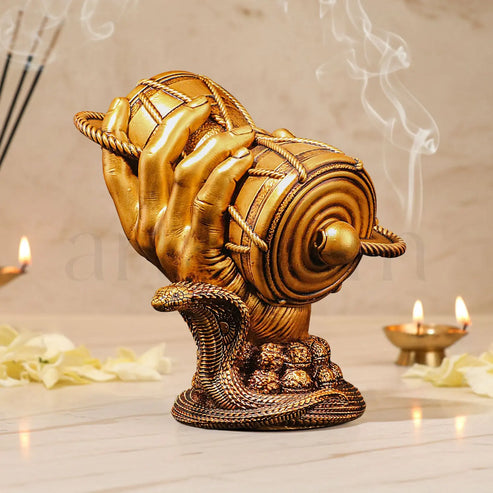
The snake around Shiva’s neck symbolizes fearlessness and control over death. It also represents awakened spiritual energy (Kundalini).
Trishul (Trident)
The trident represents the three fundamental forces of the universe—creation, preservation, and destruction. It also symbolizes control over body, mind, and soul.
Damaru (Drum)
The small drum held by Shiva represents the cosmic sound from which creation began. It symbolizes rhythm, vibration, and the origin of the universe.
Sacred Ash
Shiva is often shown covered in ash, symbolizing the temporary nature of life and material existence. It teaches detachment and spiritual awareness.
Different Forms of Shiva Statues
Shiva is depicted in many forms, each representing a different aspect of his divine nature. These forms are commonly seen in statues and sculptures.
Meditating Shiva
One of the most popular forms shows Shiva sitting in deep meditation on Mount Kailash. This statue represents peace, self-control, and spiritual enlightenment. It is widely used in yoga and meditation spaces.
Nataraja – The Cosmic Dancer
The Nataraja form shows Shiva performing the cosmic dance of creation and destruction within a circle of fire. It symbolizes the dynamic movement of the universe and the eternal cycle of life.
Ardhanarishvara
This unique form combines Shiva and Goddess Parvati into one body, half male and half female. It symbolizes balance, unity, and the harmony of masculine and feminine energies.
Dakshinamurthy
In this form, Shiva appears as a teacher seated under a tree, giving wisdom to disciples. It represents knowledge, learning, and enlightenment.
Bhairava
Bhairava is a fierce form of Shiva associated with protection and destruction of evil. Statues of Bhairava represent power, fearlessness, and justice.
Famous Shiva Statues Around the World
Many large Shiva statues have become famous landmarks and pilgrimage sites.
Adiyogi Shiva Statue
Located in Coimbatore, Tamil Nadu, the Adiyogi Shiva statue is 112 feet tall and is one of the largest bust sculptures in the world. It represents Shiva as the first yogi and symbolizes the origin of yoga.
Murudeshwar Shiva Statue
Located in Karnataka, this statue stands near the Arabian Sea and is one of the tallest Shiva statues in the world. Its scenic location attracts millions of visitors every year.
Kailashnath Mahadev Statue
Located in Nepal, this is one of the tallest Shiva statues in the world and is a major religious and tourist attraction.
Mangal Mahadev Statue
Located in Mauritius, this statue reflects the strong Hindu cultural presence on the island and is an important spiritual landmark.
Artistic Craftsmanship of Shiva Statues
Creating a Shiva statue requires great skill, patience, and spiritual understanding. Traditional sculptors follow guidelines found in ancient texts called the Shilpa Shastras, which describe proportions, expressions, and symbolic details.
Shiva statues are made from various materials, including:
- Stone
- Marble
- Bronze
- Brass
- Copper
- Wood
Stone statues are strong and long-lasting, while bronze statues allow fine detailing and elegance.
Artists carefully design Shiva’s face to show calmness, compassion, and inner strength. Every detail is created to reflect divine energy.
Spiritual Importance of Shiva Statues
For devotees, Shiva statues are not just objects—they are sacred symbols used for worship and meditation. They help create a peaceful environment for spiritual practice.
Common practices include:
- Chanting “Om Namah Shivaya”
- Offering flowers and water
- Lighting lamps and incense
- Performing rituals like Abhishekam
- Meditating in front of the statue
Many people believe that keeping a Shiva statue at home brings peace, protection, and positive energy. It also encourages mindfulness and self-discipline.
Shiva Statues in Modern Times
Today, Shiva statues are not only religious symbols but also global icons of yoga, meditation, and inner peace. As yoga becomes popular worldwide, Shiva is recognized as Adiyogi, the original teacher of yoga.
Shiva statues are commonly seen in:
- Yoga centers
- Meditation halls
- Wellness retreats
- Cultural parks
Even people outside Hinduism admire Shiva statues for their universal message of transformation, balance, and awareness.
Cultural and Economic Impact
Shiva statues also play an important role in tourism and culture. Large statues attract visitors from all over the world, supporting local businesses and artisans.
They also preserve traditional art forms passed down through generations. Sculptors who create Shiva statues continue ancient techniques that are part of India’s cultural heritage.
Conclusion
The Shiva statue is far more than a sculpture. It is a powerful symbol of spirituality, transformation, and universal energy. Each element of the statue carries deep meaning, teaching lessons about life, death, balance, and self-realization.
From ancient temples to modern monuments, Shiva statues continue to inspire devotion and reflection. They remind humanity that true peace comes from within and that transformation is an essential part of existence.
As a timeless symbol of divine wisdom and cosmic balance, the Shiva statue continues to guide millions of people toward inner peace, awareness, and spiritual awakening.